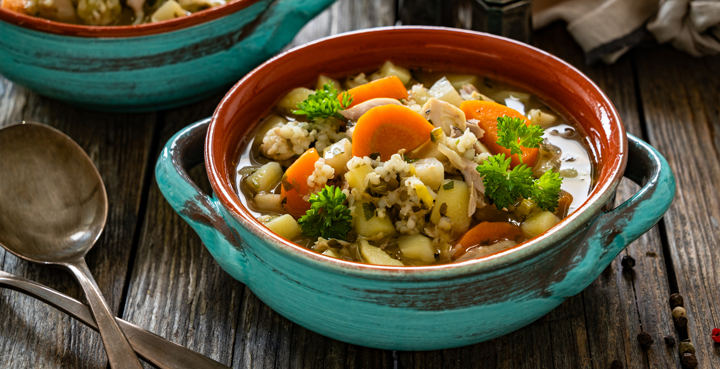
Soup can be a nutritious, satisfying meal for people living with diabetes. Whether you prefer a hearty vegetable soup, a protein-packed lentil soup or a creamy blended soup, the right ingredients can help you create a balanced meal that supports blood glucose management. Homemade soups also make it easier to control sodium and choose ingredients that suit your nutritional needs.
Here are some simple tips to help you make the most of your next bowl:
1. Load Up on Non-Starchy Vegetables
Vegetables such as spinach, kale, broccoli, cauliflower, mushrooms, celery, zucchini and peppers add fibre, vitamins and minerals without contributing large amounts of carbohydrate. They also add flavour, colour and texture to soups.
2. Choose Protein-Rich Ingredients
Adding protein helps make soup more satisfying. Try chicken, turkey, fish, eggs, tofu, beans, lentils or edamame. Protein can help balance a meal, particularly when your soup also contains carbohydrate-rich ingredients such as potatoes, pasta or rice.
3. Include Fibre-Rich Carbohydrates
Beans, lentils, split peas and barley provide fibre and other important nutrients. Fibre can help slow digestion and support blood glucose management. Remember that legumes, grains and starchy vegetables still contribute carbohydrates, so consider portion sizes and how they fit into your overall meal plan.
4. Watch the Sodium
Canned broth, bouillon cubes, soup bases and canned soups can be high in sodium. Choose low-sodium or no-salt-added broth when possible, and flavour your soup with garlic, onions, herbs, spices, lemon juice or vinegar instead. If using canned beans or vegetables, drain and rinse them to help reduce sodium.
5. Make Creamy Soups with Nutritious Ingredients
Creamy soups do not have to rely on heavy cream or large amounts of butter. Blend cooked cauliflower, carrots, white beans or other vegetables to create a smooth, creamy texture. Plain Greek yogurt can also add creaminess and protein when stirred in after the soup has cooled slightly.
6. Be Mindful of Starchy Ingredients
Potatoes, corn, noodles, rice and other grains can all be part of a diabetes-friendly soup. However, large amounts may increase the carbohydrate content of your meal. Balance these ingredients with non-starchy vegetables and protein, and adjust portions to suit your individual needs.
7. Choose Healthy Fats for Flavour
A small amount of olive or canola oil can help build flavour when sautéing onions, garlic and other vegetables. You can also add unsalted nuts or seeds as a garnish for extra texture and healthy fats. Use rich additions such as bacon, sausage and large amounts of cheese in moderation.
8. Make a Big Batch for Easy Meals
Homemade soup is an excellent option for meal preparation. Make a large batch and freeze individual portions for quick lunches or dinners. Before serving, consider pairing your soup with a source of protein or a slice of whole-grain bread, depending on the ingredients already in the soup and your nutritional needs.
Ready to warm up with a delicious bowl? Try the following diabetes-friendly soup recipes from our recipe collection!
One-Pot Mushroom Barley Soup

One-Pot Creamy Broccoli Soup with Tofu

One-Pot White Bean & Kale Soup

One-Pot Cabbage Roll Soup

One-Pot Chicken Vegetable Quinoa Soup

One-Pot Minestrone Soup

One-Pot Hamburger Soup with Turkey

One-Pot Split Pea Soup with Kale

Soup is a simple, versatile way to enjoy more vegetables, fibre and protein while creating satisfying meals that fit into your diabetes management plan. With a few thoughtful ingredient choices, you can enjoy everything from light vegetable soups to hearty, comforting favourites.
For personalized guidance on diet and blood glucose management, speak to a Registered Dietitian.