Barley is a nutrient dense ancient whole grain, containing a variety of vitamins and minerals that can be beneficial for your health. Barley can be beneficial for blood sugar control given its macronutrient profile.
Barley is a great choice for people living with diabetes because it is a high-fibre whole grain and complex carbohydrate with a relatively low glycemic index (GI). Its soluble fibre, particularly beta-glucan, can support healthy blood sugar and cholesterol levels, while helping you feel full and satisfied longer – beneficial for weight management. Versatile and delicious, barley works well in soups, salads, grain bowls, risottos and side dishes, making it an easy choice for healthy meals.
There are two main types of barley, which are hulled and pearl. Hulled barley has had its inedible outer hull removed and has a chewy texture with a nutty flavour. Pearled barley has the hull and the bran removed providing a lighter colour and milder flavour compared to hulled barley. The bran component of barley contains the majority of barley’s fibre and nutrients. Therefore, hulled barley is recommended to those with diabetes as it is more nutritious than pearl barley.
Helpful tips for cooking with barley:
- Choose hulled or pot barley. Hulled barley is less processed and higher in fibre, while pot barley is slightly more polished but still a nutritious choice.
- Rinse before cooking. Rinse barley under cold water to remove excess starch and any debris.
- Skip soaking if you’re short on time. Barley can be cooked without soaking, although soaking overnight can reduce cooking time.
- Cook a big batch. Cooked barley keeps well in the refrigerator and can be frozen in portion-sized amounts for quick meals.
- Use broth for flavour. Cooking barley in low-sodium vegetable or chicken broth adds flavour without relying on extra salt.
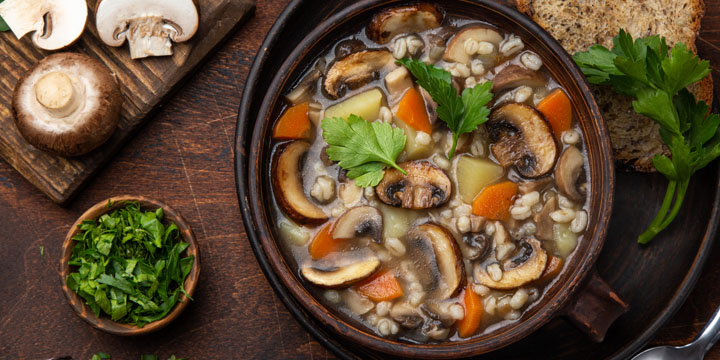
- Add barley to soups and stews. It absorbs liquid and becomes pleasantly chewy, making it a hearty addition to vegetable, chicken or bean-based soups.
- Try barley instead of rice. Use cooked barley in grain bowls, pilafs, stuffed vegetables or as a side dish.
- Be mindful of the portion. Barley is a nutritious whole grain, but it still contains carbohydrates. A reasonable serving is about ½ cup cooked as part of a meal.
- Pair it with protein and vegetables. Combining barley with foods such as fish, chicken, tofu, beans and plenty of vegetables can make a balanced, satisfying meal.
- Don’t overcook it. Barley should be tender but slightly chewy. Check it toward the end of cooking so it doesn’t become mushy.
Ready to add more barley to your meals? The following recipes make it easy to enjoy this nutritious, high-fibre grain.
Turkey Barley Soup

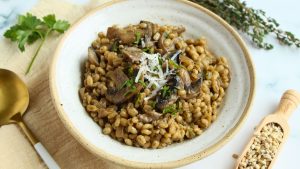
Skillet Barley and Mushroom Risotto
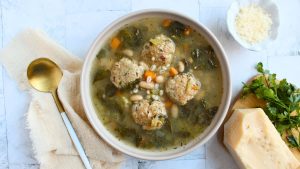
Chicken Ball Soup with Barley & White Beans
One-Pot Mushroom Barley Soup
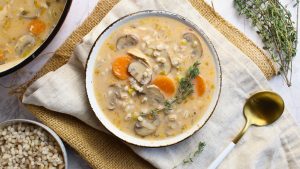
Adding barley to your meal plan is a simple way to enjoy a nutritious, fibre-rich whole grain while supporting blood sugar and appetite management. Try using barley in soups, salads, grain bowls or as a satisfying alternative to rice or other refined grains.
For personalized guidance on diet and blood glucose management, speak to a Registered Dietitian.